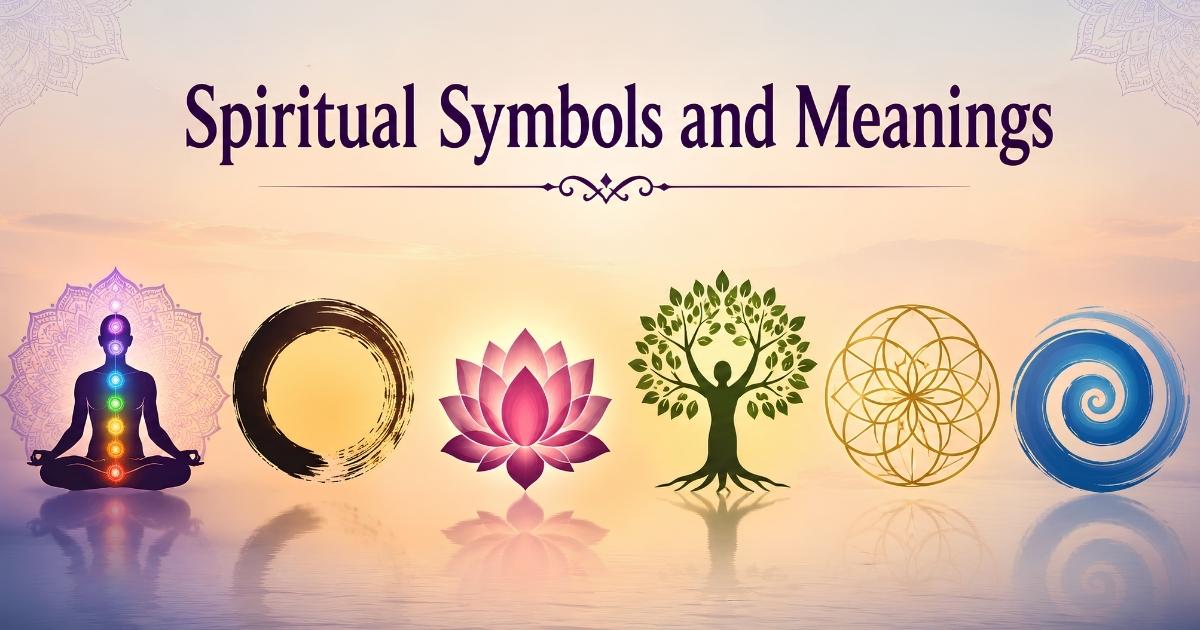

Long before written language existed, humans were already speaking to each other through symbols. A circle scratched into a cave wall, a spiral carved into stone, a cross drawn in the sand. These simple shapes carried meaning that words could not yet express, and thousands of years later, they still do.
Spiritual symbols remain everywhere today. They show up on jewelry, tattoos, temple walls, meditation apps, and yoga mats. Yet most people wear or display them without knowing their true origin or deeper meaning. This guide breaks down the most powerful spiritual symbols in history, explains where they come from, and shows you how to understand and use them with genuine respect and intention.
What Are Spiritual Symbols and Meanings?
A spiritual symbol is a visual sign that represents an idea, force, or belief that cannot be fully captured in words alone. Concepts like eternity, protection, enlightenment, or the connection between body and soul are difficult to describe directly, so cultures created images to carry that meaning instead.
Spiritual symbols differ from ordinary logos or decorative patterns in one key way: they hold layered meaning built up over generations of use in ritual, prayer, art, and daily life. A symbol like the lotus flower is not just a pretty shape. It represents a specific journey (from mud to bloom) that has been recognized across multiple cultures for thousands of years.
These symbols generally fall into a few categories:
- Protection symbols (hamsa hand, evil eye, pentagram)
- Growth and awakening symbols (lotus, tree of life, spiral)
- Unity and balance symbols (yin and yang, infinity symbol, triquetra)
- Divine connection symbols (om, cross, ankh)
What makes a symbol genuinely spiritual, rather than simply decorative, is repetition across generations. A shape only earns that weight once it has been used consistently in ritual, prayer, healing, or storytelling long enough to accumulate collective meaning. This is also why the same symbol can look almost identical across cultures that never had contact with each other. The spiral, for example, appears in Celtic stonework, Native American petroglyphs, and Hindu temple carvings, with each tradition arriving independently at a similar image to represent growth and life’s cyclical nature.
Decode this Symbol: Puerto Rican Symbols
Why Spiritual Symbols Hold So Much Power
Spiritual symbols work on more than one level at once, which is exactly why they have survived for so long.
The Spiritual Level
On a spiritual level, symbols act as a bridge between the visible and invisible. They give people something tangible to focus on when trying to connect with ideas as abstract as the divine, the afterlife, or universal energy.
The Psychological Level
Psychologist Carl Jung argued that certain images, what he called archetypes, appear across unrelated cultures because they emerge from a shared layer of the human mind he termed the collective unconscious. This is one reason a symbol from ancient Egypt can still feel emotionally familiar to someone who has never studied Egyptian history. Modern research on the brain also shows that symbolic images are processed faster than language, and they can trigger memory and emotion almost instantly.
The Cultural Level
Symbols also carry the weight of shared history. A symbol used in Hindu temples for thousands of years means something very different to that community than it might to someone encountering it for the first time online. Understanding this context matters, especially before adopting a symbol from a culture that is not your own.
Types and Variations of Spiritual Symbols and Meanings
While there are hundreds of spiritual symbols across world cultures, these six are among the most recognized and widely used today.
1. The Ankh
Originating in ancient Egypt, the ankh is shaped like a cross with a loop at the top. It represents eternal life and was often carried by gods and pharaohs in Egyptian art as a sign of divine power over life and death.
2. The Lotus Flower
Sacred in both Hinduism and Buddhism, the lotus grows up through muddy water before opening into a clean, untouched bloom. It symbolizes spiritual awakening, purity, and the ability to rise above hardship.
3. The Yin and Yang
This Chinese symbol represents balance between opposing forces, light and dark, masculine and feminine, action and stillness. Neither side can exist without the other, which is the core teaching behind the symbol.
4. The Cross
The most recognized Christian symbol, the cross represents sacrifice, redemption, and faith. Variations of the cross also appear in pre-Christian cultures, where it often symbolized the four cardinal directions or the meeting point of heaven and earth.
5. The Om Symbol
Considered the sound of the universe in Hindu tradition, Om represents the union of mind, body, and spirit. It is chanted at the start of meditation and yoga practices to center awareness before deeper spiritual work begins.
6. The Hamsa Hand
Found across Middle Eastern, Jewish, and North African traditions, the hamsa is a hand-shaped amulet believed to protect against negative energy and the evil eye. It is one of the most commonly worn protection symbols in the world today.
Read More: Symbols of Power
Spiritual Symbols and Meanings Across Cultures
The same underlying human needs, protection, connection, and meaning, produced strikingly similar symbols in cultures that had no contact with one another.
- Ancient Egypt: Symbols like the ankh and the Eye of Horus centered on protection, health, and the afterlife.
- India: Hindu and Buddhist traditions gave rise to Om, the lotus, and the mandala, all connected to consciousness and inner balance.
- China: Taoist philosophy produced yin and yang along with symbols tied to harmony, luck, and the natural order.
- Ancient Greece: The caduceus and labyrinth reflected ideas about healing, life force, and the soul’s journey.
- Native American traditions: The medicine wheel and spiral sun represented harmony with nature and connection to the four sacred directions.
Spiritual Symbols for Life, Healing, and Success
Beyond religion, many people use spiritual symbols today as personal tools for intention setting. In practices like meditation, Reiki, and sound healing, a symbol becomes something to focus attention on rather than a magic object.
Commonly used purposes include:
- Healing: the lotus, the caduceus, and the Dharma wheel are often used to support emotional or physical recovery.
- Success and abundance: symbols like the infinity sign and certain sacred geometry patterns are used to represent limitless growth.
- Protection: the hamsa, evil eye, and pentagram are worn to guard against negative energy.
- New beginnings: the spiral and the sunrise motif represent cycles, renewal, and starting fresh.
These symbols are usually paired with a specific practice rather than used passively. Someone working with the lotus for healing might meditate on an image of its opening, visualizing their own recovery as a similar gradual unfolding. Someone using the infinity sign for abundance might wear it as jewelry and treat it as a daily reminder to think beyond short-term scarcity. The symbol itself does not do the work. It functions more like a focal point that keeps intention consistent over time, which is why the same few symbols keep reappearing across very different healing and success practices worldwide.
Spiritual Symbols in Art, Film, and Pop Culture
Spiritual symbolism did not stay confined to temples and scripture. It shows up constantly in modern storytelling. Films use circular imagery to represent cycles of fate, directors frame doorways and thresholds to signal transformation, and musicians borrow sacred geometry for album art and stage design. Even minimalist logo design often borrows from ancient symbolism, since simple, balanced shapes still register as meaningful to the human brain.
What It Means When Spiritual Symbols Appear in Dreams
Symbols frequently resurface in dreams, and many spiritual traditions treat this as significant. A snake might represent transformation or a hidden fear. A door can signal a coming opportunity or transition. A circle may point to wholeness or a situation coming full circle. While dream interpretation is personal and not an exact science, noticing which symbols repeat in your dreams can offer insight into what your mind is processing beneath the surface.
Positive vs Negative Symbol Meaning
Context changes everything when it comes to symbolism. The same shape can carry a completely different meaning depending on culture, time period, and intention.
- The spiral can represent growth in one tradition and loss of control in another.
- The pentagram, upright, has long stood for the five elements and protection, yet it has also been misused in pop culture to suggest something sinister.
- The swastika, an ancient symbol of good fortune in Hinduism and Buddhism for thousands of years, was later co-opted and turned into a symbol of hate in the 20th century.
This is why understanding a symbol’s origin matters. Meaning is not fixed. It is shaped by history, and by who is using the symbol and why.
How to Choose and Use a Spiritual Symbol
If you’re drawn to a symbol, whether for a tattoo, jewelry, or a meditation space, take a moment to research its origin first. A symbol tied to a specific living culture or closed religious practice deserves to be understood and respected before it’s adopted.
A few practical guidelines:
- Learn the symbol’s original cultural and historical context before using it.
- Choose a symbol that reflects something true about your own journey, rather than one that simply looks appealing.
- If getting a spiritual tattoo, consider placement and permanence carefully, since these symbols often carry personal significance for life.
- Use the symbol intentionally, in meditation, journaling, or daily reflection, rather than treating it as decoration alone.
Conclusion
Spiritual symbols have survived for thousands of years because they answer a need language alone cannot meet. They give shape to ideas as large as eternity, healing, and human connection. Whether you’re drawn to the ankh’s promise of eternal life, the lotus’s story of rising above hardship, or the balance found in yin and yang, these ancient signs still offer something modern life often lacks: a quiet, visual reminder of what actually matters.
Understanding a symbol’s true history and meaning transforms it from a simple decoration into something genuinely powerful, a small piece of shared human wisdom you can carry with you.
