
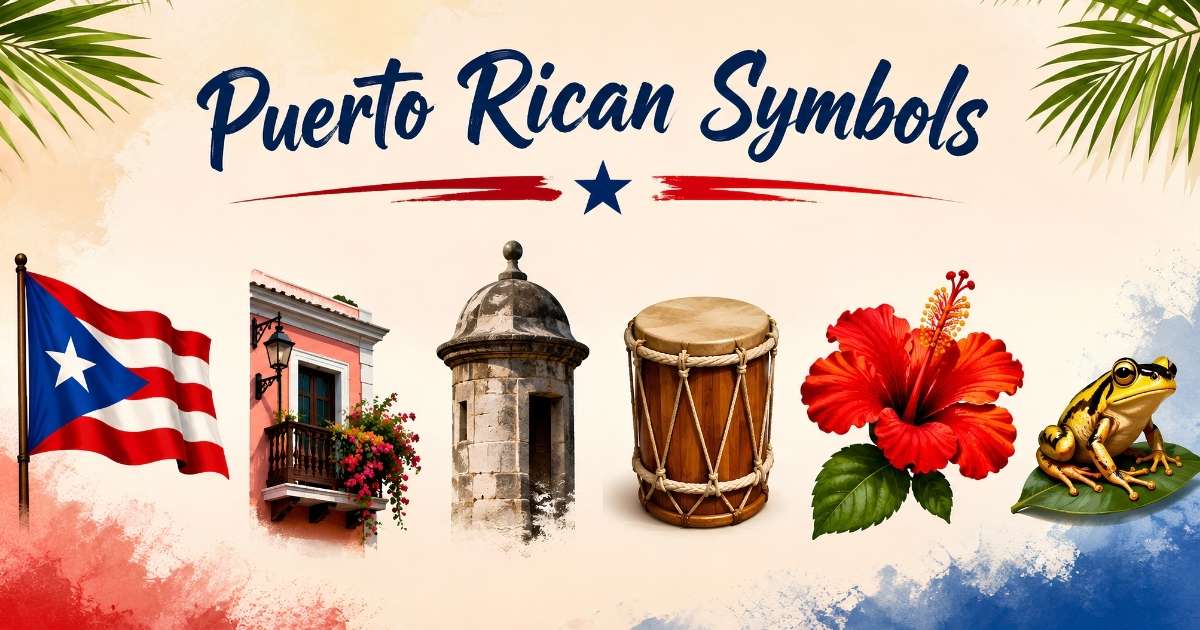

Puerto Rico speaks in symbols long before it speaks in words. A coquí frog calling at dusk, a hibiscus bloom on a fence post, a flag snapping in the trade winds. Each one carries a piece of the island’s story, from the Taino people who first carved meaning into stone to the modern Boricuas who wear that same meaning on their skin.
This guide brings together the most important Puerto Rican symbols and their meanings in one place. You will learn what they represent, where they come from, and why they still matter, whether you are researching your heritage, planning a tattoo, or simply curious about the island’s culture.
What Are Puerto Rican Symbols?
Puerto Rican symbols are the images, objects, colors, and figures that represent the island’s history, spirituality, and national identity. They come from three main roots: the Indigenous Taino people, Spanish colonial culture, and West African heritage brought through the transatlantic slave trade. Together these three influences shaped a symbolic language found in the flag, native wildlife, folk traditions, and sacred carvings that Puerto Ricans still use to express pride and belonging today.
Puerto Rican Symbols And Their Cultural Meanings
Puerto Rican culture blends indigenous, European, and African symbolism into one visual identity. Below are the most searched categories and what each one actually means.
Puerto Rican Symbols And Meanings
The coquí frog stands for home and pride, the flag stands for freedom and sacrifice, the ceiba tree stands for strength, and the flor de maga stands for natural beauty. Each symbol reflects a value that Puerto Ricans associate with island life.
Puerto Rican Symbols Tattoos

People choose Puerto Rican tattoos to permanently display heritage and belonging. The most common designs combine the flag, the coquí, the Taino sun, or the word “Boricua” with palm trees or ocean waves.
See More: Family Symbols in 2026
Taino Symbols And Meanings
Taino symbols are petroglyphs, carvings, and sculpted objects that represented gods, nature, and daily life for the island’s Indigenous people. Because the Taino had no written alphabet, these images functioned as their main form of storytelling and record keeping.
Puerto Rican Symbols Copy And Paste
Many people search for simple icons to paste into bios, captions, or messages. Common copy and paste options include the flag emoji 🇵🇷, the sun ☀️, the frog 🐸, and the hibiscus 🌺, often paired with the word “Boricua” to show pride online.
Puerto Rico Taino Symbols
Taino carvings still survive on boulders and cave walls in the island’s central mountains, especially around Utuado and Jayuya. These images continue to inspire local jewelry, murals, and ceremonial art today.
Puerto Rico Taino Symbols Tattoos
The three pointed stone figure known as a trigonolito, along with the carved cemí face, are popular tattoo choices because they represent ancestral protection and a direct link to the island’s first inhabitants.
Famous Symbols That Represent Puerto Rico
These are the icons most people picture first when they think of Puerto Rico, from ancient carvings to modern flags.
Taino Sun Symbol Meaning
The sun symbol, most famously carved into a rock known as El Sol de Jayuya, represented life force, energy, and divine power for the Taino, who believed the sun and moon were born from the same sacred cave.
Puerto Rico Symbol Frog

The frog symbol refers to the coquí, a tiny native tree frog whose call gave rise to the saying “Soy de aquí, como el coquí,” meaning “I am from here, like the coquí.”
Puerto Rican Symbols Toa
Toa was one of the island’s historic Taino cacicazgos, or chiefdoms, ruled by a cacique in the area now known as Toa Alta and Toa Baja. Symbols tied to Toa reflect this regional leadership and settlement history.
Taino Puerto Rican Symbols
Beyond the sun and the frog, common Taino motifs include spirals, human faces, birds, and turtles, each carved to represent a specific deity, natural force, or life event.
Read More: 7+ Symbols of Virgo
Puerto Rican Tattoos
Popular full designs pair the Puerto Rican flag with a coquí, a palm silhouette, or a map outline of the island, often finished with a Taino sun for a layered, meaningful piece.
Puerto Rican Taino Symbols
The cemí, a three pointed carved figure, represented an ancestral spirit or deity and remains one of the most respected symbols in modern Puerto Rican art and jewelry.
Puerto Rico Symbols
The core list most people search for includes the flag, the coquí frog, the flor de maga, the ceiba tree, and the Taino sun carving.
Symbols Of Puerto Rico
Some symbols, like the flag and coat of arms, are legally official. Others, like the coquí and baseball, are simply de facto symbols that Puerto Ricans have embraced through tradition rather than law.
Puerto Rican Protection Symbols

Newborns are often given an azabache bracelet, a black coral or jet charm believed to guard against mal de ojo, or the evil eye. Taino warriors similarly wore small carved cemí amulets on their foreheads for protection in battle.
Traditional Puerto Rico Symbols And National Identity
National identity in Puerto Rico is expressed through both official emblems and everyday folk traditions passed down through generations.
Things That Represent Puerto Rico
Beyond the flag, look for the jíbaro farmer, the straw pava hat, bomba and plena music, and the colorful vejigante mask worn during Carnival celebrations in Ponce and Loíza.
Puerto Rico Symbols And Meanings
The pava hat represents humility and self reliance, while the flor de maga represents elegance rooted in native soil rather than imported beauty standards.
Puerto Rico National Symbols
Recognized national symbols include the flag, the coat of arms, the ceiba tree, the flor de maga flower, the coquí, and baseball as the national sport, alongside the nickname “Isla del Encanto,” or Island of Enchantment.
Puerto Rico Symbol
If Puerto Ricans had to choose a single defining symbol, most would point to the coquí. Its call is heard nowhere else on earth and has become shorthand for belonging to the island.
Deep Symbolic Meaning
Puerto Rican symbols work on several levels at once.
- Spiritual layer: Cemís connected the living to ancestors and gods like Yúcahu and Atabey.
- Historical layer: The Lares flag, sewn in 1868 for an uprising against Spain, still represents resistance and self determination.
- Personal layer: For the diaspora, the flag and coquí become portable homeland, carried in tattoos, jewelry, and home decor far from the island.
- Natural layer: The ceiba and coquí represent survival, since both have endured hurricanes, drought, and habitat loss for generations.
Types and Variations of Puerto Rican Symbols
Here is a closer look at the six most recognized symbol types and what sets each one apart.
The Coquí Frog
Visual description: a small, round bodied tree frog, usually shown mid call. Meaning: home, identity, and resilience. Where it appears: folklore, music, souvenirs, tattoos, and national branding.
The Sun Symbol (Taíno Sun)
Visual description: a circular face with radiating lines, carved into stone. Meaning: life, energy, and divine guidance. Where it appears: petroglyphs, jewelry, and spiritual artwork.
The Puerto Rican Flag
Visual description: five stripes of red and white with a blue triangle and white star. Meaning: red for the blood of sacrifice, white for individual liberty, blue for the branches of government, and the star for the island itself. Adopted officially on July 25, 1952.
The Coquí Taíno Symbol
Archaeologists have found coquí petroglyphs carved into caves such as those on Mona Island, some dating to the 13th century. Researchers note that frog like hand positions in these carvings often represented femininity within Taino belief.
The Hibiscus Flower
Many people call the hibiscus Puerto Rico’s national flower, but the true official flower is the flor de maga, Thespesia grandiflora, designated by law in 2019. The hibiscus is closely related and widely grown, which is why the two are often confused.
The Taíno Spiral
Visual description: concentric circles or a swirling line carved into rock. Meaning: the cycle of water, life, and cosmic movement, echoing rivers and hurricanes central to Taino cosmology.
Puerto Rican Symbols Across Cultures

Puerto Rico’s symbols exist because three cultures collided and blended. The Taino contributed nature based carvings and words like hamaca and huracán. Spanish colonizers brought Catholic imagery, the coat of arms, and traditions like the azabache bracelet against the evil eye. West African heritage added bomba and plena rhythms, vibrant Carnival masking traditions, and spiritual practices such as Santería. This layered mixing, known as mestizaje, is why a single Puerto Rican symbol can carry indigenous, European, and African meaning at once, a pattern also seen in Taino Dominican and Cuban symbolism across the wider Caribbean.
Puerto Rican Symbols in Art, Movies and Pop Culture
Puerto Rican symbols travel well beyond the island. Street murals across Santurce in San Juan turn coquís, flags, and Taino faces into large scale public art. Films like West Side Story and In the Heights use the flag as visual shorthand for identity and pride within diaspora communities. Musician and actor Lin Manuel Miranda has drawn on his Puerto Rican heritage throughout his work, while global artist Bad Bunny has repeatedly worn the traditional pava hat on major stages, including the 2025 Met Gala, reintroducing jíbaro imagery to a worldwide audience. Reggaetón artists frequently display the flag at concerts, keeping these symbols visible in mainstream pop culture.
Spiritual and Dream Meaning of Puerto Rican Symbols
In Taino belief, the cemí carried spiritual force strong enough to guide caciques and healers during ritual trances. That sense of unseen guidance lingers in modern folk interpretation. Many Puerto Ricans describe the coquí’s night song as comforting, almost like a spiritual presence reminding the diaspora of home. In folk dream interpretation, hearing a coquí in a dream is sometimes read as a sign of homesickness or a pull back toward one’s roots, while the sun symbol is associated with clarity and renewed energy.
Positive vs Negative Meaning
Positive associations
- Pride, unity, and belonging
- Protection, as with the azabache and the cemí
- Resilience after hurricanes and hardship
Negative or contested associations
- The coat of arms carries colonial imagery some view as a reminder of conquest
- The term jíbaro was historically used as a classist insult before it was reclaimed
- Mass produced souvenirs can strip sacred Taino symbols of their original spiritual weight
Why Humans Are Attracted to Puerto Rican Symbols
People are drawn to Puerto Rican symbols because they tell a complete story in a single image: survival, migration, faith, and celebration. The bold colors and nature based imagery translate easily into tattoos, fashion, and art. For the Puerto Rican diaspora, these symbols offer a compact, portable way to stay connected to an island many no longer live on. And for outsiders, the mix of ancient Taino spirituality with modern Caribbean pride feels both mysterious and deeply human, which is exactly why interest in these meanings keeps growing.
Conclusion
From the ancient petroglyphs carved by the Taino to the flag that waves over San Juan today, Puerto Rican symbols carry centuries of history in a single glance. They represent survival through colonization, hurricanes, and migration, along with pride, protection, and identity that Puerto Ricans carry wherever they go. Whether you are choosing a tattoo, decorating your home, or simply learning more about Boricua heritage, understanding these symbols connects you to a culture that has always found a way to turn memory into meaning.
