
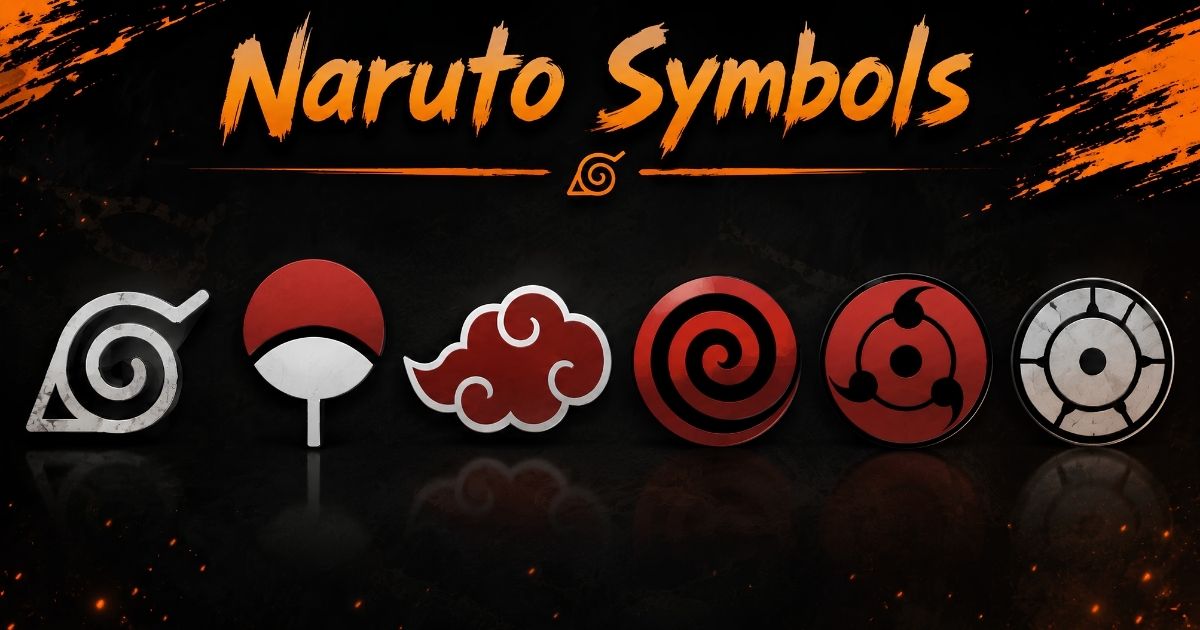

If you have ever paused while watching Naruto and wondered why a simple spiral or a red cloud felt so emotionally powerful, you are not alone. Naruto is loaded with symbols that carry meanings far deeper than their visual design. These are not random anime logos. Each emblem, clan crest, village mark, and curse seal was carefully crafted to reflect real spiritual traditions, psychological truths, and cultural histories.
Whether you are a lifelong fan or just beginning your Naruto journey, understanding these symbols will completely transform how you experience the series.
What Are Naruto Symbols?

Naruto symbols are visual emblems, clan marks, village insignias, sealing patterns, and iconic designs that appear throughout Masashi Kishimoto’s legendary anime and manga series. They serve two purposes at once. On the surface, they identify characters, clans, and organizations. Beneath that surface, they communicate complex emotional and philosophical ideas.
The most recognized Naruto symbols include:
- The Hidden Leaf Village emblem
- The Uzumaki Clan spiral
- The Uchiha Clan fan crest
- The Akatsuki red cloud
- The Curse Mark of Orochimaru
- The Sharingan eye pattern
Each one tells a story without a single word.
The Deep Symbolic Meaning Behind Naruto Symbols
Spiritual Meaning
Many Naruto symbols are rooted in real spiritual traditions. The chakra system used throughout the series draws from ancient Hindu and Buddhist concepts of energy centers within the body. The five basic nature elements in the Naruto universe (fire, earth, water, wind, and lightning) come directly from the Buddhist idea of the Godai, or the Great Five elements that make up existence.
The Sharingan eye technique shares visual and philosophical roots with the Hindu concept of the Third Eye, representing heightened perception, enlightenment, and the ability to see beyond ordinary reality. Even Shinto mythology shaped the story deeply. The three Sharingan abilities named Amaterasu, Tsukuyomi, and Susanoo are taken directly from major Shinto deities, each connected to the sun, the moon, and storms.
Psychological Meaning
At a psychological level, these symbols function as emotional mirrors. The Uchiha fan reflects pride mixed with grief. The Curse Mark visualizes how unchecked ambition can consume a person from the inside out. The Akatsuki cloud represents how suffering, if left unprocessed, can push someone toward radical and destructive choices.
Psychologists note that humans process symbols emotionally before logically. This is precisely why seeing the Hidden Leaf emblem on a headband instantly triggers feelings of loyalty and belonging, even for someone watching from thousands of miles away.
Cultural Meaning
Culturally, Naruto blends traditional Japanese clan emblems called Kamon with Buddhist philosophy, samurai history, and East Asian folklore. This layered cultural foundation gives the symbols a timeless weight. They feel ancient even within a fictional world because, in many ways, they are built on real ancient ideas.
Read More: Woman Symbols of Strength and Courage
Most Important Naruto Symbols and Their Meanings

Uzumaki Clan Symbol
Visual Description
The Uzumaki symbol is a simple but striking black spiral. Clean, continuous, and self-contained, it suggests perpetual motion without a beginning or end.
Meaning
The name “Uzumaki” literally means whirlpool or vortex in Japanese, and the spiral perfectly captures that essence. The symbol represents life energy, resilience, eternity, and the extraordinary will to keep moving forward no matter what. In many ancient cultures worldwide, spirals carry meanings of rebirth, spiritual growth, and cosmic cycles.
For Naruto himself, this symbol is deeply personal. Born into loneliness and rejection, he wore the spiral on his back like a declaration that life keeps moving, no matter how many times you fall.
Where It Appears
- On Naruto’s orange jacket
- On shinobi flak vests throughout the Hidden Leaf Village
- On the back of Minato Namikaze’s iconic coat
- Woven into the Hidden Leaf Village symbol itself
Uchiha Clan Symbol
Visual Description
The Uchiha crest is a red and white fan shape. In Japanese, it is called an “Uchiwa,” a traditional round paper fan historically used to fan flames.
Meaning
Fire sits at the center of this symbol’s meaning. The Uchiha Clan is famous for its fire-style jutsu, and the fan is the perfect instrument to feed and control flame. Beyond the literal, the fan represents pride, raw power, emotional intensity, and tragically, the uncontrollable blaze of revenge that consumed the entire clan.
There is beautiful irony in this symbol. The same fire that gave the Uchiha their strength ultimately destroyed them. Sasuke and Itachi both carry this contradiction in everything they do.
Where It Appears
- On the back of Sasuke’s clothing throughout the series
- At the Uchiha clan compound in Konoha
- In Itachi’s costume even as a missing-nin, hinting that he never truly abandoned his family
Akatsuki Cloud Symbol
Visual Description
The Akatsuki cloud is a bold red cloud with a white outline, displayed on the iconic black cloaks worn by every Akatsuki member.
Meaning
This symbol carries some of the heaviest emotional weight in the entire series. The red color represents the blood spilled during conflicts that created the Akatsuki. The cloud itself was inspired by the traditional Japanese cloud patterns found in ancient art, but here it becomes something dark and foreboding.
The Akatsuki cloud symbolizes war, grief, rebellion, and the profound emotional scars that violence leaves behind. Every member of the Akatsuki was shaped by tragedy. The cloud on their backs quietly announces that they are people whom the world has already broken.
Where It Appears
- On all Akatsuki member cloaks
- In promotional material representing the organization
- Widely used in fan art and tattoo culture worldwide
Read More: Symbols of Friendship
Hidden Leaf Village Symbol
Visual Description
The Hidden Leaf Village symbol features a stylized leaf with an integrated spiral element. It appears on the iconic metal headbands worn by Konoha shinobi.
Meaning
This is the most recognized symbol in all of Naruto, and arguably in all of anime. It represents loyalty, unity, and the Will of Fire, the philosophical belief that the village must protect its people like a parent protects a child, passing that love from generation to generation.
The spiral element within the leaf is a direct nod to the Uzumaki Clan, acknowledging their alliance with Konoha and their contribution to the village’s founding. For Naruto, earning the right to wear this symbol on his forehead was not just a milestone. It was proof that after years of being invisible, he finally belonged somewhere.
Where It Appears
- On shinobi headbands throughout the entire series
- On the Hokage’s robes and official Konoha documents
- On training grounds and village gates
Curse Mark Symbol
Visual Description
The Curse Mark begins as three tomoe arranged in a circular pattern on Sasuke’s neck. When activated, it spreads across the body as dark, flame-like markings.
Meaning
The three tomoe design connects to the magatama, an ancient Japanese symbol representing protection, spiritual power, and continuous movement. In Sasuke’s case, however, this protective symbol becomes a mark of corruption.
The Curse Mark represents temptation, the addiction to power, and the gradual erosion of identity that happens when someone trades their humanity for strength. It also reflects the yin and yang philosophy, the idea that light and darkness are always coexisting and that the wrong choice can tip the balance permanently.
Where It Appears
- On Sasuke’s neck throughout Shippuden
- On Anko Mitarashi, another survivor of Orochimaru’s cursed seals
- Referenced throughout discussions of forbidden jutsu and Orochimaru’s experiments
Naruto Symbols Across Cultures

Japanese Culture
Japanese culture is the deepest root of Naruto symbolism. Clan symbols resemble historical Kamon, the family crests used by samurai clans for centuries to mark identity and loyalty. Buddhist concepts of karma, rebirth, and the six realms of existence directly shaped major story arcs, particularly Nagato’s six Paths of Pain.
Chinese Culture
Chinese philosophy, especially Taoist ideas about Yin and Yang balance, runs through the entire series. The constant tension between opposing forces, love and hatred, peace and war, light and shadow, reflects this ancient framework of complementary opposites that cannot exist without each other.
Hindu Spiritual Influence
The chakra system, which forms the entire energy foundation of the Naruto universe, draws from Hindu traditions where chakras are spiritual energy centers in the human body. The Senju Clan’s symbol is modeled on the Vajra, a ritual object from Buddhist and Hindu traditions representing indestructible force and spiritual power.
Western Interpretation
Western fans often connect the Akatsuki’s red cloud to themes of anarchy and resistance against oppressive systems. The Curse Mark’s three-tomoe pattern has sparked comparisons to various Western symbols, though these interpretations are cultural readings layered onto designs rooted in Japanese tradition.
Modern Global Culture
Today, Naruto symbols have transcended cultural borders entirely. They appear on fashion runways, in tattoo studios from Tokyo to São Paulo, and on merchandise sold on every continent. The spiral, the cloud, the fan, and the leaf have become a shared global visual language for themes of resilience, identity, and belonging.
Naruto Symbols in Art, Movies and Pop Culture
Tattoos
Naruto tattoos are among the most popular anime-inspired body art in the world. Fans choose specific symbols to represent personal experiences. Someone who survived loneliness might tattoo the Uzumaki spiral. Someone who has faced trauma might connect with the Akatsuki cloud. The Curse Mark is popular among fans who resonate with the idea of fighting their own darker impulses.
Fashion
Streetwear brands have enthusiastically embraced Naruto symbols. Hoodies, sneakers, jackets, caps, and accessories featuring the Hidden Leaf emblem, Uchiha crest, and Akatsuki cloud appear in major fashion markets globally. These designs communicate a specific cultural identity, one built on strength, rebellion, and emotional depth.
Movies and Media
Naruto’s symbolic language has quietly influenced modern storytelling worldwide. Themes of destiny, sacrifice, trauma, and redemption that these symbols represent continue showing up in Western films, television shows, and even video games. The visual shorthand that Kishimoto built has entered the broader vocabulary of popular storytelling.
Art and Fan Creations
Fan artists constantly reimagine Naruto symbols in new forms. From digital paintings and watercolor prints to sculptures, murals, and embroidery, the symbols inspire extraordinary creativity. Online platforms like DeviantArt, Instagram, and Pinterest are filled with millions of original works built around these iconic visual anchors.
Spiritual and Dream Meaning of Naruto Symbols
Seeing the Uzumaki Spiral in Dreams
Dreaming of the Uzumaki spiral often connects to themes of personal resilience and life energy. Spirals in dream symbolism across many traditions represent cycles, ongoing journeys, and the refusal to stay still. Seeing this symbol in a dream may reflect a period of growth or a reminder that momentum matters more than speed.
Seeing the Akatsuki Cloud
The Akatsuki cloud appearing in dreams can reflect internal conflict, grief, or feelings of being misunderstood by the world. It may signal that unprocessed pain needs attention, or that part of you is wrestling with the temptation to give up on conventional paths.
Seeing the Hidden Leaf Symbol
The Hidden Leaf emblem in dreams is generally a positive sign. It often symbolizes belonging, loyalty, and a desire for community. It may appear during times when a person is searching for their place in the world or feels ready to commit to something larger than themselves.
Seeing the Curse Mark
Dreaming of the Curse Mark typically relates to internal struggles with power, ambition, or temptation. It can reflect anxiety about losing control or awareness of habits and desires that feel difficult to master. This symbol in dreams often calls for honest self-reflection.
Positive and Negative Meanings of Naruto Symbols
Every major Naruto symbol holds both positive and negative dimensions, which is exactly what makes them feel real.
Uzumaki Spiral:
- Positive: Resilience, life force, endless growth
- Negative: Obsession with forward motion, ignoring the need to rest
Uchiha Fan:
- Positive: Pride, passion, power, family love
- Negative: Revenge, arrogance, self-destruction through hatred
Akatsuki Cloud:
- Positive: Solidarity among the broken, rebellion against injustice
- Negative: Extremism, pain weaponized against others
Hidden Leaf Emblem:
- Positive: Unity, loyalty, belonging, the Will of Fire
- Negative: Institutional blind spots, sacrificing individuals for village politics
Curse Mark:
- Positive: Access to extraordinary strength, transformation
- Negative: Loss of identity, addiction to power, corruption
Why Humans Feel Drawn to Naruto Symbols
The human brain is wired to connect with symbols. Visual imagery bypasses language and speaks directly to emotion. Naruto symbols work because they are attached to stories that reflect genuine human experiences: loneliness, ambition, grief, love, betrayal, and the desperate hope for redemption.
When someone sees the Uzumaki spiral on a hoodie, they are not just seeing a design. They are feeling Naruto’s entire journey in a single image. That emotional compression is powerful. It explains why a fictional symbol can mean as much to a person as a family crest or national flag.
Naruto Symbols and Their Hidden Connection to Real Life
The deepest reason Naruto symbols resonate globally is that they speak to universal human conditions. The Uzumaki spiral reflects the experience of anyone who has ever had to rebuild their life from nothing. The Curse Mark mirrors the real psychological struggle of wanting power or relief badly enough to compromise your values. The Akatsuki cloud captures the emotional reality of people who have been so damaged by the world that they want to burn it down.
Masashi Kishimoto created a fictional universe, but he filled it with symbols drawn from the oldest human traditions on earth. That is why these images feel timeless. They were never entirely fictional to begin with.
Conclusion
Naruto symbols are far more than anime artwork. They are emotional documents, spiritual maps, and cultural bridges that connect ancient traditions to modern storytelling. From the life-affirming Uzumaki spiral to the haunted Akatsuki cloud, every symbol in this series was designed to make you feel something real.
Understanding what these symbols mean does not just enrich your experience of Naruto. It offers a mirror to your own inner world, showing you where you find resilience, where you struggle with darkness, and where you are still searching for belonging.
True fans know the story. Now you know the symbols that carry it forward.
