
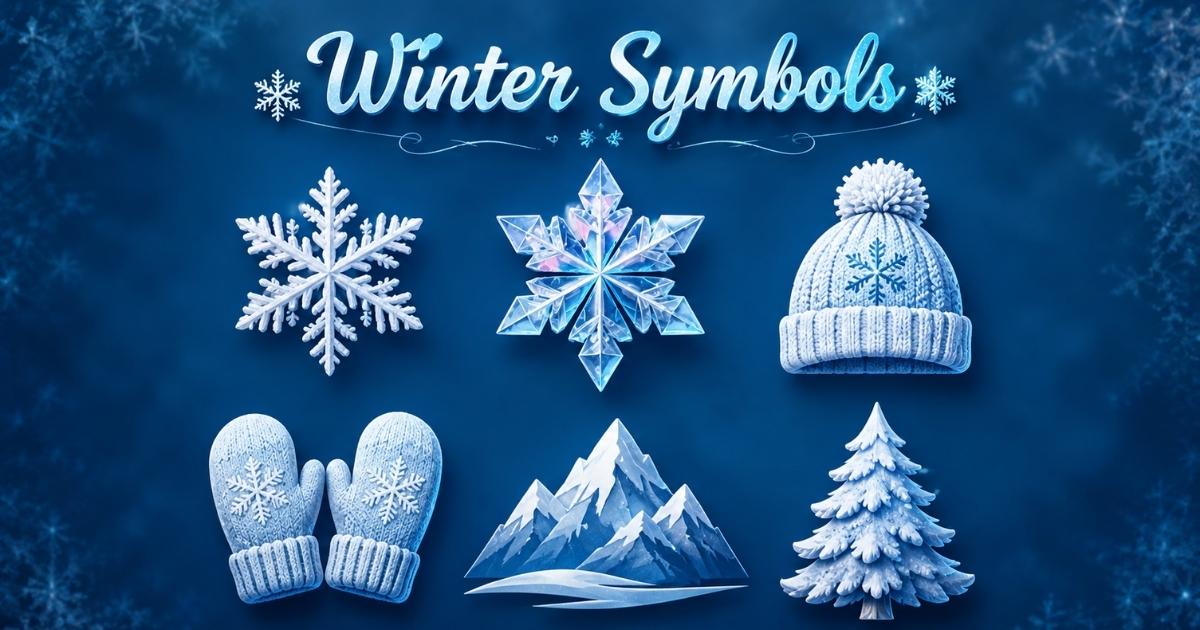

Winter has a way of slowing everything down. The trees go bare, the light fades earlier, and the world outside gets quiet in a way no other season manages. That quiet is not empty though. For thousands of years, people have looked at snow, frost, cold wind, and firelight and read something deeper into them: endings, patience, resilience, and the promise that light always returns.
This guide breaks down what winter symbols actually mean, where they come from, and how to understand their spiritual, psychological, and cultural weight in 2026. Whether you’re searching for the meaning behind a snowflake, want cute winter symbols to copy and paste, or you’re curious about what winter represents spiritually, you’ll find it here.
What Are Winter Symbols?
Winter symbols are natural images and seasonal elements, such as snow, ice, bare trees, fire, and long nights, that carry meaning beyond their physical form. They represent ideas like rest, closure, inner strength, and renewal.
These meanings didn’t appear overnight. Ancient communities depended on reading the seasons correctly. When the ground froze and food grew scarce, winter became linked with survival, patience, and quiet endurance. Over generations, those survival lessons turned into symbolism that still shows up in religion, literature, tattoos, and everyday language today.
A few things typically qualify as winter symbols:
- Weather elements: snow, ice, frost, cold wind
- Natural imagery: bare trees, long dark nights, evergreens
- Human responses: fire, candlelight, warm clothing, gathering indoors
- Cultural markers: holiday icons, folklore figures, seasonal festivals
Read More: French Symbols
Winter Symbols And Spiritual Meanings
Spiritually, winter is often read as a season of pause rather than a season of loss. Many traditions treat it as a necessary quiet before new growth, similar to how a seed rests underground before it sprouts.
Snowflake Symbol Text
A simple text-based snowflake symbol you can copy directly:
❄ ❆ ❅ ✻ ✼ ⁂
These characters are commonly used in captions, bios, and winter-themed messages because they render on almost every device without needing an image file.
Winter Symbols Cute

For a softer, cozier aesthetic, people often pair snowflakes with warm imagery like mugs, mittens, and stars rather than stark, icy visuals. The combination signals comfort rather than cold.
Cute Winter Emojis
Popular emoji picks for winter posts include: ❄️ ⛄ 🧣 🧤 ☃️ 🔥 🕯️ ✨ 🌨️ 🦌
What Does The Cold Symbolize?
Cold is generally read as a symbol of clarity, emotional distance, or isolation. It can represent a season of life where things feel slow or withdrawn, but it can also represent mental sharpness, since cold air is often associated with alertness.
What Does Snow Symbolise?
Snow symbolizes purity, stillness, and a clean slate. Because it blankets everything evenly, it’s often read as a symbol of equality or a fresh start after a difficult period.
Symbolism Of Snow
Snow sits between two states, water and ice, which is why it’s frequently linked to transition. It shows up in stories and art as a marker of change: a turning point where a character’s situation shifts.
Snow Symbolism Meaning
At its core, snow symbolism meaning centers on three ideas: purity, quiet reflection, and impermanence. Snow doesn’t last, and that fleeting nature is part of what makes it meaningful.
Spiritual Meaning Of Snow
In several spiritual traditions, white snow represents being cleansed or forgiven, since white is tied to purity in many belief systems. A snow-covered dream or scene is often interpreted as calm rather than as a warning, unless the dreamer feels trapped or cold within it.
Winter Spiritual Representation
Spiritual Meaning Of Winter
Winter spiritually represents healing, introspection, and personal growth. It’s frequently described as the season where a person is meant to look inward instead of outward.
Connotations Of Winter
Common connotations include rest, endings, silence, patience, and hidden potential. Negative connotations can include loneliness or stagnation, though most traditions balance this with the idea that winter is temporary.
What Does Winter Represent Spiritually?
Spiritually, winter represents the pause between one chapter of life and the next. Many belief systems treat it as a time for letting go of what no longer serves a person, so they can enter a new season lighter.
Copy Paste Winter Symbols

A ready set of copy-paste winter symbols:
❄️ ⛄ ❆ ✻ 🌨️ 🧊 🔥 🕯️ ⭐
Winter Symbols Copy And Paste Ideas
Whether you want a cute, simple, or minimal look, here are ready-to-use combinations for captions, bios, and messages:
- Winter symbols copy and paste: ☃️❄️🧣 · ✨❄️✨ · 🔥🕯️🔥
- Cute winter symbols: ⛄ 🧤 🧣 ☕ 🕯️
- Cute winter symbols copy and paste: ❄️☕🧣 · ⛄✨❄️ · 🔥🕯️☃️
- Simple winter symbols: ❄ ❆ ⛄ 🔥
For the simplest option of all, a single ❄️ or ❆ character works well in usernames or bios where space is limited.
Read More: Symbols of Hope
Winter Symbols Emoji And Aesthetic Designs
Winter Symbols Emoji
The most searched winter emoji set includes ❄️ ⛄ 🧊 🌨️ 🦌 🧣 🕯️ and 🔥, each tied to a different part of the season, from cold weather to warmth indoors.
Winter Emoji Combos
Try combos like:
- ❄️🔥 (cold outside, warm inside)
- ⛄🧣 (playful and cozy)
- 🕯️✨ (quiet and reflective)
Winter Symbols Aesthetic
An aesthetic winter look tends to favor muted whites, soft blues, and warm gold accents, mirroring the balance between icy landscapes and firelight.
Winter Symbols PNG
For design projects, transparent PNG icons of snowflakes, pinecones, and candles are widely used in social graphics, printables, and greeting cards.
Winter Symbols Vector
Vector versions of these same icons are preferred for anything that needs resizing without quality loss, such as logos or printed materials.
Winter Symbols Clipart
Clipart sets typically bundle snowflakes, mittens, snowmen, and evergreen branches together, since these are the most requested combination for cards and crafts.
Winter Symbols Drawing
Hand-drawn winter symbols often simplify a snowflake down to six lines crossing at a center point, since that basic structure is instantly recognizable even in a rough sketch.
Snowflake Symbols And Snow Meaning
Snowflake Symbol
The snowflake is the single most recognized winter symbol worldwide. Its six-sided structure is tied to balance and order in nature.
Snowflake Text Symbol
Text versions include ❄ ❅ ❆, which differ slightly in stroke style but carry the same meaning.
Snowflake Symbols

Multiple snowflake symbols are often used together to represent a snowfall or a collective idea, like a community made of unique individuals.
Snowflakes Symbols
Because no two snowflakes form identically, they’re widely used as a metaphor for individuality, a comparison that became especially popular in modern motivational language.
Snowflakes Symbol
Beyond individuality, a single snowflake can also represent fragility, since it’s delicate and temporary by nature.
Snow Symbolism
Broadly, snow symbolism touches purity, stillness, transition, and the beauty found in impermanence.
What Does Snow Symbolize?
Snow symbolizes a reset. Falling snow covers old ground and creates something visually new, which is why it’s tied to fresh starts.
What Does Snow Represent?
Snow represents both softness and power. It falls gently, yet enough of it can reshape a landscape entirely, similar to how small consistent actions can create major change over time.
Winter Symbolism And Spiritual Meaning
The Symbols Of Winter
The most common symbols of winter are snow, bare trees, frost, long nights, and fire. Together, they represent both the difficulty and the comfort of the season. If choosing a single image to represent winter, most cultures default to snow or a bare tree, since both visually communicate stillness and dormancy.
What Does Winter Symbolize?
Winter represents endings, rest, and reflection, the seasonal equivalent of a deep breath before starting something new. As a whole, winter symbolism marks the closing of one cycle and a quiet preparation for the next. It’s rarely treated as purely negative; most interpretations pair the cold with an eventual return of light.
Winter’s Spiritual Meaning
The symbolic and spiritual meaning of winter both point to the same core idea: nothing stays frozen forever. What looks dormant is often quietly preparing for renewal.
Cold Symbolism
Cold specifically symbolizes clarity and emotional honesty. Cold air sharpens focus, and in symbolic terms, that translates to seeing a situation without distraction or softness.
Cultural And Unique Winter Symbols
Ancient Winter Symbols
Fire, the sun wheel, and evergreen branches were among the earliest winter symbols, used by early communities to represent survival through the darkest months.
Pagan Winter Symbols
Pagan traditions leaned heavily on evergreens, holly, and the sun’s return, celebrating the winter solstice as the turning point back toward longer days.
Celtic Winter Symbols
Celtic culture used spirals and nature-based carvings to represent cycles, tying winter to the larger wheel of the year rather than treating it as separate from spring.
Japanese Winter Symbols
In Japanese tradition, snow, plum blossoms, and cranes represent winter, often carrying a bittersweet beauty tied to the fleeting nature of the season.
Christmas Winter Symbols

Christmas-specific symbols include evergreen trees, stars, bells, and snowflakes, blending older seasonal symbolism with religious meaning around birth and renewal.
Winter Symbols Not Christmas
For non-holiday winter imagery, common picks are snow, ice, fog, frost, bare branches, and cold wind, none of which carry religious weight.
Winter Symbols Ideas / Winter Symbols And Meanings / Things That Represent Winter
Beyond the obvious, animals like foxes, owls, and deer are often included as things that represent winter, since they’re associated with survival and quiet movement through cold landscapes.
Deep Symbolic Meaning of Winter Symbols
Spiritual Meaning
Spiritually, winter symbols point toward stillness as a form of strength, not weakness. Sitting with quiet rather than rushing past it is often framed as the real lesson of the season.
Psychological Meaning
Psychologically, winter imagery is linked to introspection. Shorter days naturally push people indoors and inward, which is why winter often coincides with reflection, journaling, and goal-setting for the year ahead.
Cultural Meaning
Culturally, winter symbols shift depending on region and history, but nearly every culture treats the season as a pause before renewal rather than a true ending.
Types and Variations of Winter Symbols
- Snow: Purity, a fresh start, temporary beauty
- Ice: Emotional distance, stillness, or preserved potential
- Bare Trees: Letting go, dormancy, hidden life waiting beneath the surface
- Winter Night: Deep rest, mystery, the unknown
- Cold Wind: Change in motion, a signal that something is shifting
Winter Symbols Across Cultures
Norse Culture
Norse tradition treated winter as a test of endurance, with long dark months symbolizing hardship that had to be survived before spring’s reward.
Ancient Chinese Philosophy
In traditional Chinese thought, winter aligns with water and stillness, representing conservation of energy and quiet strength rather than stagnation.
Celtic Traditions
Celtic seasonal beliefs tied winter to transformation, viewing the solstice as a rebirth point rather than simply the coldest stretch of the year.
Japanese Culture
Japanese aesthetics often frame winter through the idea of quiet, fleeting beauty, similar to how cherry blossoms represent spring’s brief bloom.
Christian Symbolism
In Christian symbolism, winter is tied to spiritual waiting and humility, often connected to themes of anticipation before the arrival of light.
Winter Symbols in Art, Movies and Pop Culture
Winter shows up constantly as a storytelling device rather than just a backdrop.
- In film, a snowy scene often marks an emotional turning point or a character’s isolation.
- In painting, winter landscapes are used to convey solitude and realism.
- In literature, winter frequently signals internal conflict or a character reaching a breaking point before change.
- In tattoos, snowflakes and frost patterns represent resilience and individuality.
- In fashion, winter tones and textures are used to suggest minimalism and quiet elegance.
Spiritual and Dream Meaning of Winter Symbols
In dream interpretation, winter imagery tends to reflect the dreamer’s current emotional season rather than a literal event.
- Dreaming of snow can point to emotional calm, or sometimes suppressed feelings.
- Ice in a dream may reflect emotional distance in a relationship or situation.
- A peaceful snowy dream often signals inner balance.
- Feeling stuck or trapped in a wintry dream can point to a stalled plan or decision waiting to be revisited.
Positive vs Negative Meaning of Winter Symbols
| Positive Meaning | Negative Meaning |
| Rest and recovery | Isolation |
| Clarity and focus | Emotional coldness |
| Fresh start | Stagnation |
| Inner strength | Loneliness |
| Quiet reflection | Fear of scarcity |
Neither side is more “correct.” Most traditions hold both readings at once, since winter’s difficulty and its stillness tend to arrive together.
Why Humans Are Attracted To Winter Symbols
People are drawn to winter symbols for a few consistent reasons:
- They validate slowing down. In a culture that prizes constant productivity, winter symbolism gives permission to rest.
- They offer emotional language. Snow, ice, and fire give people an easy way to describe feelings that are hard to put into words directly.
- They connect to memory. Childhood snow days, holiday traditions, and family gatherings tie winter symbols to nostalgia.
- They reflect a universal cycle. Endings followed by renewal is a pattern found in nature, relationships, and personal growth, which makes winter symbolism feel personally relevant no matter the culture.
Conclusion
Winter symbols are more than seasonal decoration. Snow, ice, fire, and silence each carry a version of the same message: quiet periods are not empty, they’re preparation. Whether you’re using these symbols for a caption, exploring their spiritual meaning, or simply curious why winter feels so different from every other season, the answer keeps coming back to the same idea. Stillness and renewal are two sides of the same cycle, and winter is where that cycle quietly begins again.
