

Long before written language spread across the globe, people were already talking to each other through symbols. A spiral carved into stone, a circle drawn in the sand, a pair of wings etched onto a temple wall. These images carried weight. They told stories, marked beliefs, and connected communities in ways that words sometimes couldn’t.
Today, ancient symbols still show up everywhere: in jewelry boxes, on tattoo sleeves, in home decor, and in the logos of brands trying to borrow a little of that old-world gravity. But most people who wear or display these symbols only know half the story. They’ve seen the image, not the meaning behind it.
This guide walks through some of the most powerful ancient symbols and meanings from cultures around the world, explains why certain designs have become popular choices for ancient symbols tattoos, and gives you the background you need to use these symbols with genuine understanding rather than guesswork.
What Are Ancient Symbols and Why Do They Still Matter?
Ancient symbols are visual marks, glyphs, or images that carried specific meaning within early civilizations, often tied to religion, nature, protection, or social identity. Unlike modern logos or icons, which are usually designed for branding purposes, these symbols developed organically over centuries and were shaped by the beliefs of the people who used them.
What makes them fascinating is how consistent certain themes are across unrelated cultures. Ancient Egyptians, Norse tribes, and Indigenous peoples of the Americas never had contact with one another, yet all three developed symbols representing the sun, the cycle of life, and protection from harm. That’s not a coincidence. It suggests that humans across history were grappling with the same big questions: birth, death, fear, hope, and our place in the natural world.
Understanding this context matters because it changes how you relate to these symbols. A tattoo isn’t just a nice design anymore. It becomes a small piece of a much longer human conversation.
Read More: Winter Symbols
Powerful Ancient Symbols and Meanings You Should Know
Some symbols have survived thousands of years almost unchanged in appearance, and their meanings remain just as relevant. Here are a few of the most recognized.
The Ankh (Ancient Egypt)
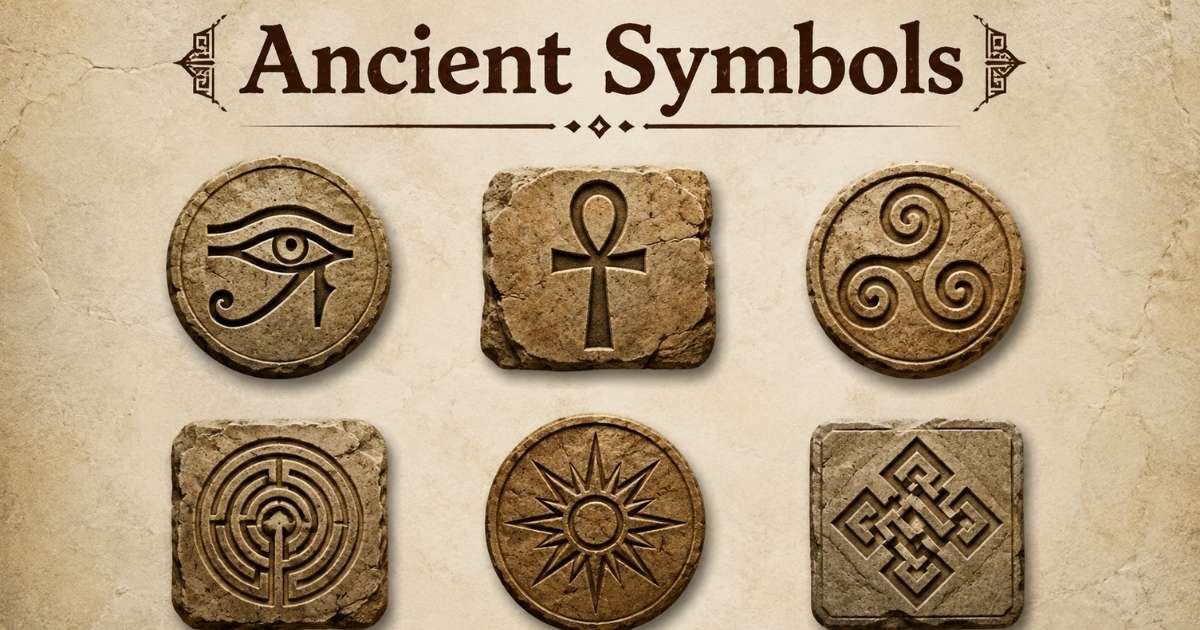
The ankh looks like a cross topped with a loop, and it represented eternal life in ancient Egyptian culture. You’ll find it held by gods and pharaohs in tomb paintings, symbolizing the breath of life itself. It’s one of the most requested ancient symbols tattoos today because the meaning translates so cleanly: vitality, resilience, and continuity beyond death.
The Ouroboros (Ancient Greece and Egypt)
A serpent eating its own tail, the ouroboros represents infinity, renewal, and the cyclical nature of existence. Versions of this symbol appear in Egyptian, Greek, and Norse traditions, each interpreting it slightly differently but landing on similar themes of endless cycles and self-renewal.
The Eye of Horus (Ancient Egypt)
This symbol represents protection, health, and royal power. According to Egyptian mythology, the god Horus lost his eye in a battle, and it was later restored, making the symbol a mark of healing and restoration. It remains one of the most powerful ancient symbols and meanings tied to personal protection.
Yin Yang (Ancient China)
This one needs little introduction. The yin yang represents balance between opposing forces such as light and dark, active and passive, masculine and feminine. It’s rooted in Taoist philosophy and reflects the idea that opposites aren’t enemies; they’re partners that complete each other.
The Triquetra (Celtic Origin)
Also called the Trinity Knot, this three-pointed symbol represents unity and interconnectedness. It predates Christianity but was later adopted into Christian symbolism to represent the Holy Trinity. Its unbroken lines suggest eternity and the connection between mind, body, and spirit.
Hamsa Hand (Middle East and North Africa)
Shaped like an open palm, often with an eye in the center, the hamsa is believed to ward off the evil eye and bring good fortune. It’s used across Jewish, Muslim, and Middle Eastern cultures, though the specific traditions and names differ.
Ancient Symbols and Meanings Across Different Cultures
Symbols rarely stay confined to one place. As trade routes expanded and people migrated, symbols traveled too, often picking up new layers of meaning along the way.
Norse and Viking Symbols
The Vegvisir, sometimes called the Viking compass, was believed to help travelers find their way through rough conditions, whether literal storms or difficult life circumstances. Another well-known Norse symbol, Yggdrasil (the World Tree), represented the connection between nine realms in Norse cosmology, tying together the physical and spiritual worlds.
Native American Symbols
Many Indigenous nations across North America developed distinct symbol systems tied to nature, animals, and spiritual guidance. The feather, for example, often represents honor, strength, and a connection to the divine. It’s worth noting that these symbols are deeply tied to specific tribal traditions, so it’s important to approach them with respect rather than treating them as generic decoration.
Greek and Roman Symbols
The laurel wreath symbolized victory and honor, often awarded to athletes and military leaders. The caduceus, a staff with two intertwined snakes, became associated with medicine and healing, though its original meaning in Greek mythology was tied to commerce and negotiation under the god Hermes.
Ancient Symbols Tattoos: Choosing Designs With Real Meaning
Tattoos have become one of the most common ways people connect with ancient symbolism today. But not every popular tattoo shop flash sheet gets the history right, and a lot of people end up with symbols that mean something very different from what they intended.
Here’s how to approach the process thoughtfully:
Research the origin, not just the image. A quick search for “ancient symbols tattoos” will pull up thousands of designs, but not all sources explain where a symbol actually comes from. Cross-check meanings using museum resources, academic articles, or cultural organizations tied to that symbol’s origin.
Understand the cultural context. Some symbols, like the yin yang or the ankh, are widely shared and generally welcomed outside their culture of origin. Others, particularly certain Indigenous or tribal symbols, carry restrictions on who can use them and how. When in doubt, ask someone connected to that culture or choose a different symbol.
Think about placement and pairing. Many people combine multiple symbols into a single tattoo, such as a triquetra layered with Celtic knotwork, or an ouroboros wrapped around a compass. If you’re combining symbols from different traditions, make sure the meanings actually complement each other rather than clashing.
Work with an experienced artist. Ancient symbols often rely on precise geometry (the triquetra and Celtic knots especially) so small errors in linework can distort the symbol’s meaning or balance. Look for an artist with a portfolio showing this specific style.
Read More: Iconic War Symbols
How to Choose the Right Ancient Symbol for You
With so many options, picking one symbol can feel overwhelming. A few practical questions can help narrow things down:
- What personal quality or life event do you want to represent? Protection, new beginnings, resilience, and balance are common starting points.
- Does a specific culture or ancestry resonate with your own background or beliefs?
- Are you drawn more to the visual design or the story behind it? Both matter, but knowing which one matters more to you will guide your research.
- Would you prefer a widely recognized symbol, or something more obscure that invites conversation?
There’s no wrong answer here. Some people choose symbols purely because the shape speaks to them visually. Others spend months researching before committing. What matters most is that you understand what you’re choosing before it becomes permanent, whether that’s on your skin or in your home.
Common Misconceptions About Ancient Symbols
A few myths circulate widely enough that they’re worth addressing directly.
“All ancient symbols are religious.” Many are, but plenty were originally tied to trade, medicine, navigation, or social status rather than worship.
“Older symbols are always more powerful or authentic.” Age doesn’t automatically equal legitimacy. Some symbols marketed as “ancient” online are actually modern inventions dressed up with old-sounding names.
“A symbol means the same thing everywhere.” As shown with the swastika, which was a peaceful symbol of good fortune in Hindu, Buddhist, and Jain traditions for thousands of years before being violently co-opted in the 20th century, context changes everything. Always research a symbol’s full history, not just the version that shows up first in a search result.
Conclusion
Ancient symbols have survived for thousands of years because they capture something that still feels true today: our need for protection, our search for balance, and our desire to mark the moments that matter. Whether you’re drawn to the Eye of Horus, the triquetra, or a symbol tied to your own family history, taking the time to understand its roots turns a simple design into something with real meaning.
If you’re planning to get an ancient symbol tattoo or add one to your home, don’t stop at the first search result. Dig a little deeper, talk to historians or cultural experts where possible, and choose a symbol that genuinely reflects what you want to carry with you. That extra research is what separates a trend from a tradition.
