
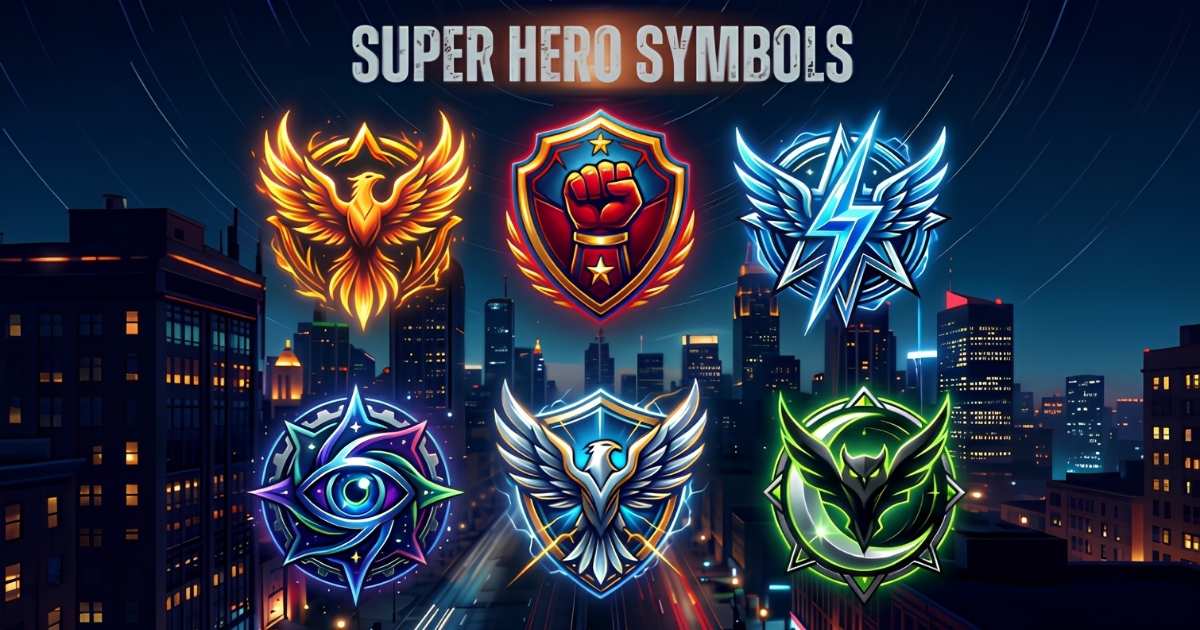

Superhero symbols are some of the most powerful visual icons ever created by human imagination. Think about it: one glance at a bat silhouette, a red-and-yellow lightning bolt, or a star-spangled shield and you instantly feel something. No words needed. That’s not an accident. These iconic superhero logos are carefully designed to hit you emotionally before your brain even has time to process what you’re looking at.
In 2026, superhero culture is bigger than ever. Marvel and DC franchises continue to dominate global entertainment, merchandise sales, and social media. But beyond box office numbers and streaming stats, there’s something deeper worth exploring: why do these superhero emblems connect with us so profoundly? What makes them feel timeless rather than trendy?
This article digs into the real meaning, history, and emotional power behind superhero symbols that have made heroes truly unforgettable. Whether you’re a lifelong comics fan, a casual moviegoer, or just curious about the hidden language of visual storytelling, you’ll find something valuable here.
What Are Superhero Symbols?
Superhero symbols are visual emblems tied directly to a hero’s identity, mission, and values. You’ll find them on costumes, shields, masks, weapons, and merchandise. But calling them “just logos” seriously undersells what they do. These are visual icons of heroism that work more like ancient tribal markings than modern graphic design.
Long before comic books existed, humans used symbols to communicate power, loyalty, and protection. Egyptian pharaohs wore sacred animal signs. Roman legions carried battle standards. Medieval knights displayed heraldic crests on their armor. These weren’t decorations. They were declarations of identity. Superhero costumes carry on that exact tradition, just wrapped in spandex and CGI.
What separates a great superhero identity symbol from a forgettable one is its ability to communicate a complete emotional story in a single glance. Superman’s “S” isn’t just a letter. According to DC Comics lore, it’s the Kryptonian symbol for hope. Batman’s bat isn’t just an animal. It’s a declaration that fear itself can become a weapon. Every great heroic emblem earns its place by telling a story the moment you see it.
Read More: 45+ Legendary Leadership Symbols From History That Still Guide Leaders Today
Deep Symbolic Meaning of Superhero Symbols
The symbolic meaning of heroes goes far deeper than most people realize. These aren’t random designs. They’re layered with emotional symbolism, cultural references, and psychological triggers that have been refined over decades of storytelling.
Spiritual Meaning of Superhero Symbols
On a spiritual level, superhero symbols represent transformation. They mark the moment an ordinary person becomes something greater than themselves. That journey from weakness to strength mirrors something universally human. It’s no coincidence that the heroic journey described by mythologist Joseph Campbell shows up in nearly every major superhero origin story.
Superman’s “S” is the clearest example of spiritual awakening built into a symbol. In the 2013 film Man of Steel, Jor-El explains to his son that the symbol has meant “hope” for thousands of years on Krypton. That single piece of storytelling transformed a letter into a timeless symbol of human potential. People who wore Superman shirts before that film still felt the hope. The spiritual meaning was already there, even if audiences didn’t know the backstory.
Glowing emblems, wings, and celestial patterns in hero design often symbolize inner light overcoming darkness. They represent the idea that every person carries a spark of something extraordinary inside them. That’s a spiritual message, delivered visually, that resonates across religions, cultures, and generations.
Psychological Meaning of Superhero Symbols
Psychologist Carl Jung argued that humans are deeply shaped by archetypes, universal patterns that appear across myths, dreams, and stories throughout history. Superhero archetypes like the protector, the warrior, the savior, and the rebel map almost perfectly onto these Jungian patterns. Their symbols act as emotional anchors connected to these deep mental frameworks.
Color psychology plays a huge role here that most people overlook. Red communicates urgency, danger, and raw power (Spider-Man, The Flash, Iron Man). Blue signals trust, hope, and calm authority (Superman, Captain America). Black creates mystery, fear, and sophistication (Batman, Black Panther). Gold suggests nobility and divine status (Wonder Woman, Thor). These aren’t arbitrary choices. They’re deliberate emotional triggers that influence your subconscious response to symbols before you even consciously register the logo.
The psychological impact of symbols also extends to how they make fans feel about themselves. Research in behavioral psychology shows that wearing a symbol associated with positive traits (strength, courage, justice) can actually increase confidence and performance in real people. This effect has been called “enclothed cognition.” It’s one reason why a kid wearing a Superman cape genuinely feels braver.
Cultural Meaning of Superhero Symbols
Cultural symbolism shifts with the times, and superhero symbols have always reflected what society needs most in a given era. Captain America’s shield became famous during World War II because Americans desperately needed a symbol of patriotic resilience. The character literally punched Hitler on the cover of his first comic in 1941. That wasn’t subtle. It was cultural therapy through heroic imagery.
In modern America, symbols of courage and hope like the Black Panther’s panther crest carry additional cultural weight. When the 2018 Black Panther film released, that symbol became a powerful representation of Black excellence, African heritage, and cultural pride for millions of viewers. The cultural influence of superheroes had never felt more tangible or meaningful.
Today, fans wear hero logos like modern tribal identities. Walk through any American city and you’ll see Superman logos, Batman emblems, and Avengers symbols on T-shirts, hats, phone cases, and tattoos. These aren’t just fashion choices. They’re emotional badges that signal values, community, and belonging.
Types and Variations of Superhero Symbols

Not all superhero symbols are built the same. Each type carries its own visual language and emotional weight. Here’s a breakdown of the major categories and what makes each one work.
Shield Symbols in Superhero Culture
Visual Description
Circular shields, star emblems, and metallic crests. Captain America’s vibranium shield is the gold standard of this category.
Meaning
Shield symbolism communicates protection, leadership, sacrifice, and standing between danger and innocent people. A circular shield also represents completeness and unity. There are no weak edges or exposed corners. It’s a perfect defensive form.
Where It Appears
Ancient warrior cultures, comic books, military insignia, national hero designs, tattoos, and sports team branding all use shield imagery. The FBI and Secret Service logos both use shield-based designs for the same reason: instant authority and protection.
Animal Inspired Superhero Symbols
Visual Description
Bats, spiders, panthers, falcons, and wolves. Batman’s bat, Spider-Man’s web emblem, and Black Panther’s panther crest are the most recognized examples.
Meaning
Animal symbols tap into something primal in the human brain. We’ve been assigning animal traits to human qualities since prehistoric cave paintings. The bat represents fear, stealth, and the night. The spider represents patience, creativity, and hidden complexity. The panther represents power, grace, and quiet dominance. Each animal emblem mirrors its hero’s core personality.
Where It Appears
Mythology, tribal cultures, military unit patches, spiritual traditions, and sporting team mascots all use animal symbolism for the same reason: immediate emotional communication.
Lightning Superhero Symbols
Visual Description
Sharp zigzag bolts and electric patterns. The Flash’s golden lightning bolt is the most iconic example in superhero culture.
Meaning
Lightning bolt symbolism connects to raw divine energy across almost every ancient culture. Zeus used it. Thor wields it. The Flash wears it. It communicates speed, transformation, and unstoppable momentum. There’s also something democratically exciting about lightning. It strikes without warning and cannot be controlled.
Where It Appears
Ancient sky god mythology, comic heroes, energy drink branding, sports teams, and military insignia all use the lightning bolt. It’s one of the most universally understood power symbols in human visual language.
Mask Symbols in Superhero Identity
Visual Description
Hidden faces, eye masks, and armored helmets. Iron Man’s faceplate and Batman’s cowl are modern masterpieces of mask symbolism.
Meaning
Masks represent dual identity and the gap between who we are publicly versus who we are privately. Every person carries an inner self that the world rarely sees. Superhero masks give visual form to that universal human experience. They also represent sacrifice: giving up a personal life to serve a greater purpose.
Where It Appears
Ancient ritual ceremonies, Greek theater, Japanese Noh performances, superhero films, and Mardi Gras all use masks for similar psychological and social reasons.
Cosmic Superhero Symbols
Visual Description
Stars, galaxies, glowing circles, and celestial patterns. Captain Marvel’s star emblem and Doctor Strange’s Eye of Agamotto represent this category beautifully.
Meaning
Cosmic hero symbolism connects individual humans to something vast and eternal. These symbols suggest that the hero’s purpose transcends earthly concerns. They represent destiny, universal balance, and spiritual awakening on the grandest possible scale.
Where It Appears
Science fiction storytelling, ancient astronomy-based religions, meditation and spiritual practices, and fantasy world-building all draw from cosmic visual symbolism.
Superhero Symbols Across Cultures
Modern mythology didn’t emerge from thin air. Superhero symbols evolved directly from thousands of years of human visual storytelling across every major civilization.
Ancient Egyptian Culture
Egyptian gods were depicted with animal heads and glowing solar symbols to communicate divine power. The Eye of Horus is arguably the world’s first superhero emblem: a protective icon worn to ward off evil and signal sacred authority. Modern hero designs borrow heavily from this visual tradition through glowing emblems, animal imagery, and godlike characterization.
Greek and Roman Culture
Zeus’s lightning bolt became Thor’s hammer and The Flash’s lightning bolt in modern storytelling. Hercules established the template for superhuman strength and moral struggle that still defines characters like Superman and Captain America. Roman military capes directly inspired the superhero cape as a symbol of authority and power.
Medieval European Culture
Knight heraldic crests were essentially the first superhero logos. Each family or order had a unique emblem displayed on armor, shields, and banners that instantly communicated identity and values. Iron Man’s suits and Batman’s armor are direct descendants of this tradition, where protective gear becomes a symbolic statement.
Japanese Culture
Japanese anime and manga expanded symbolic representation in heroism through energy marks, clan emblems, and elaborate transformation sequences. This influence shows up clearly in characters like Doctor Strange, whose mystical symbols draw heavily from Eastern visual traditions.
Modern Western Culture
Today, superhero symbols dominate global fashion, advertising, and social movements. They’ve become shorthand for complex values. In 2020, the Superman logo appeared in several protest movements as a symbol of justice and hope for marginalized communities. That’s the power of well-crafted heroic symbolism in action.
Superhero Symbols in Art, Movies and Pop Culture
Movies
Film costume designers treat superhero symbols as storytelling tools, not decorations. Christopher Nolan’s Batman films deliberately made the bat symbol darker and more angular to reflect Bruce Wayne’s psychological trauma. The Marvel Cinematic Universe uses color and emblem design to visually connect characters across films, creating a unified visual identity system worth billions of dollars.
Paintings and Digital Art
Contemporary artists use superhero imagery to explore serious social themes. Banksy-style street artists have placed Superman logos in poverty-stricken neighborhoods as commentary on failed social promises. Museum exhibitions have compared superhero iconography to religious art, noting striking similarities in how both use symbolic language in storytelling to inspire awe.
Books and Comics
In print storytelling, symbols act as emotional anchors across decades of continuity. Batman’s symbol has appeared in thousands of comic issues since 1939, remaining recognizable through countless costume redesigns. That consistency builds deep emotional symbolism that readers carry with them across their entire lives.
Tattoos
Superhero symbol tattoos are among the most popular tattoo choices in America. Many people choose them to mark personal transformation. Cancer survivors have chosen Superman emblems. People recovering from addiction have chosen Wonder Woman’s tiara. These aren’t just fan tributes. They’re permanent declarations of personal resilience.
Fashion
From luxury fashion houses to fast fashion chains, superhero emblems have entered mainstream American wardrobes permanently. Studies show that branded superhero clothing consistently outsells generic graphic tees because the emotional power of symbols creates a deeper purchasing connection than simple aesthetics.
Spiritual and Dream Meaning of Superhero Symbols

Seeing superhero symbols in dreams often signals something your subconscious is processing about your own strength and identity. Dream interpretation experts associate heroic imagery with the inner desire to overcome challenges and discover hidden personal power.
A glowing emblem in a dream typically represents awakening confidence during a difficult period. A broken or cracked symbol suggests a current identity crisis or loss of direction. Dreaming of a shield indicates a need for emotional protection. A lightning bolt suggests sudden change is coming. Wings or cosmic symbols represent spiritual growth and expanding awareness beyond current limitations.
These dream meanings of superhero symbols aren’t random. They reflect how deeply these icons have embedded themselves into the collective human imagination. Your mind uses the most powerful symbols it knows to communicate emotional truths to you.
Positive vs Negative Meaning of Superhero Symbols
Positive Meanings
The best superhero symbols communicate hope, courage, justice, protection, sacrifice, and transformation. They remind people that strength can grow from pain and that one person standing firm can change everything. Wonder Woman’s emblem communicates feminine power and divine justice simultaneously. Captain America’s shield communicates selfless protection without aggression.
Negative Meanings
Even the greatest hero logos carry shadow meanings. Batman’s symbol communicates fear and vengeance alongside protection. The Punisher’s skull has been controversially adopted by groups that misread its meaning entirely. Symbols of fear and courage can be separated by nothing more than context and intention. This duality is actually what makes superhero symbols feel emotionally real rather than naively optimistic.
Why Humans Are Attracted to Superhero Symbols
Humans are meaning-seeking creatures. We search constantly for identity, purpose, and hope. Superhero symbols deliver all three instantly and effortlessly. That’s extraordinarily rare in visual design.
When you see a heroic emblem, you project your own emotional situation onto it. Someone facing fear sees courage. Someone feeling powerless sees strength. Someone lost sees direction. This subconscious response to symbols bypasses logical thinking entirely and speaks directly to feeling and imagination, which is why even very young children respond powerfully to superhero imagery.
There’s also the community dimension. Wearing a hero logo is a tribal signal. It says: I share these values. I belong to this community. In an increasingly fragmented social world, that sense of belonging through shared symbolic representation matters enormously to people of all ages.
Ultimately, the deepest reason humans connect with superhero symbols is that the heroic journey they represent isn’t fictional. Every person faces fear, failure, self-doubt, and the choice to keep going anyway. These symbols quietly remind us that the hero story isn’t something that happens to special people in capes. It happens inside ordinary human hearts every single day.
Conclusion
Superhero symbols are modern mythology encoded into visual form. They’re not just cool designs on T-shirts and movie posters. They’re the latest chapter in humanity’s ancient tradition of using powerful imagery to represent courage, protection, hope, and transformation.
From Captain America’s shield to Batman’s bat to Superman’s “S,” each emblem carries layers of spiritual awakening, psychological depth, and cultural meaning that audiences feel even when they can’t explain why. That’s the real power of great heroic symbolism: it speaks to something deeper than language.
The best superhero symbols don’t just make heroes unforgettable. They make the ideals those heroes represent feel permanently possible. And in a complicated world, that’s exactly the kind of reminder people need.
